

Stay-at-home mom → Test Automation Engineer
Tifa
“My daughter started asking where the money comes from. Now she sees her mom working in tech.”
Read her story
Now enrolling




















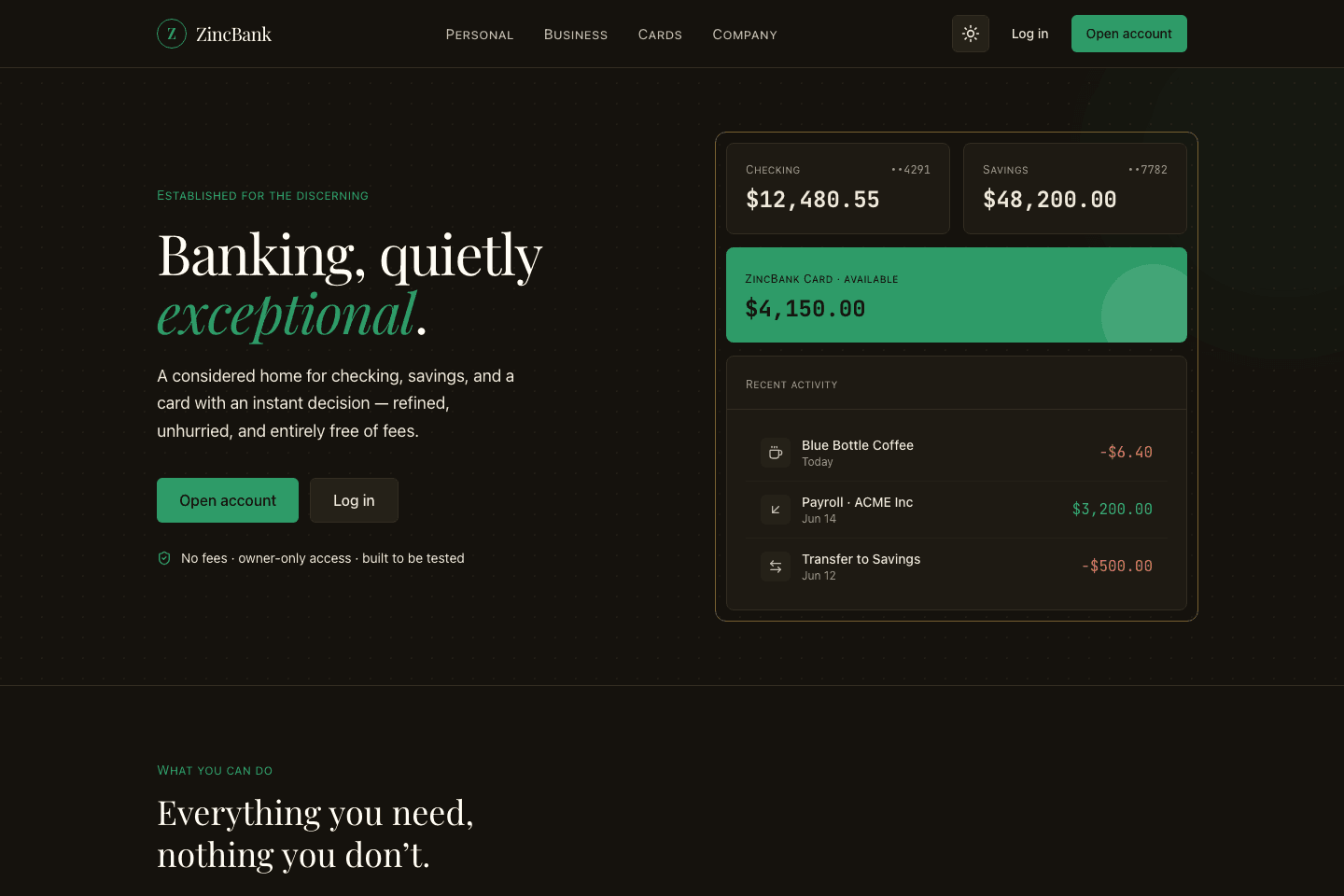
ZincBank runs in production. You point the agents at it, and you own the call on what they got wrong.
Claude Code is one of the agents you operate in the cohort. We build and teach with it as an official partner.
That someone points the agents at the app, owns the definition of “working,” and catches the money bugs before customers do. It's the one part of QA that grows because of AI. It's also the part you don't have yet.
The typing. Agents draft the tests, wire the selectors, and file the first pass.
The judgement. Someone still points the agents, and decides what correct means.
Against Zinc Bank, a real (fully simulated) banking app, you drive the whole loop: read the requirement, author the test, execute it, heal what broke for the wrong reason, and grade the result. Not slides. The actual loop, on the actual app, with you deciding what counts as correct.
A production-grade Playwright + BDD framework driven by planner, generator and healer agents over MCP — the same architecture Playwright now ships as first-party Test Agents. Then you go one level down and build your own MCP server, which is the part almost nobody else has done.
Where AI helps and where it silently fails, why a human still decides what 'correct' means, and how to talk about token, context and data governance without hand-waving. That 20% is now the whole interview.
Most agentic-QA training stops at three agents, because that is what Playwright ships for free. You build the whole chain, including the two stages nobody else talks about.
Requirement Analyzer
Requirements
Reads the requirement as a QA, not a developer. Flags what is untestable before anyone writes code.
Test Case Writer
Authoring
Extracts the acceptance criteria and drafts the cases, citing the requirement ID for every one.
Test Case Evaluator
The difference
A second, fresh agent grades the first one's work before a line of automation gets written.
Test Script Writer
Automation
Turns approved cases into Playwright and BDD, against your page objects and fixtures.
Script Evaluator
The difference
Proves every acceptance criterion has a matching assertion. A passing test that asserts nothing is the bug you never find.
Executor
Execution
Runs the suite and heals what broke for the wrong reason — a moved element, not a real defect.
Investigator
Triage
Analyses the failures that are real, so you read findings instead of logs.
Traceability check
Across all seven
Every requirement mapped to its case and its script — proposed by an agent, verified by deterministic code.
An agent that writes tests is a demo. An agent that grades another agent's tests is a system you can put in front of a release.
Four weeks: eight core sessions, plus the Wednesday interview-prep sessions. You leave with a framework you can defend line by line.
Eight of the 386 in the cohort's interview bank. Every answer traces back to a moment in a real class.
There are 378 more. You leave with all of them.
Adam Bary builds the framework in front of you, out of live production work. In the last cohort that meant debugging a real migration of 6,000 test cases on screen, unscripted, because the number in the dashboard was wrong.
I'm Kuzzat Altay. I founded CYDEO, trained more than 14,000 engineers across 36 countries, and I teach the layer that decides whether any of it can be trusted: how the models actually fail, what an agent must cite before you believe it, and what each call costs. I also read every résumé myself.
What we teach here, we run in production.

ZincBank, the app you test in the cohort, is one of several products my team designed, shipped, and runs in production.
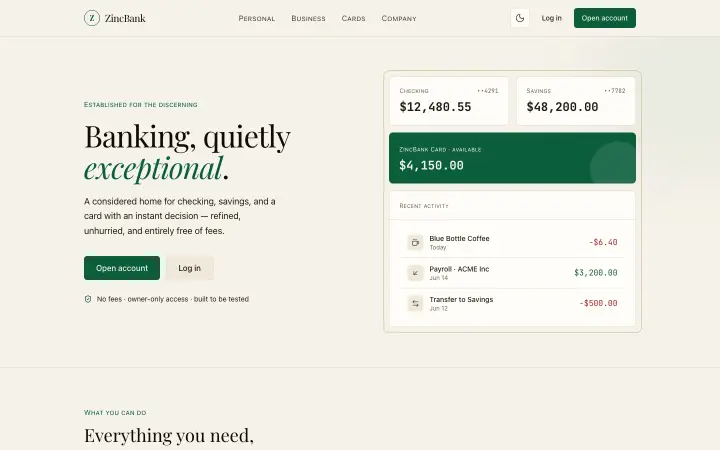
The production-grade banking app you point the agents at in class.
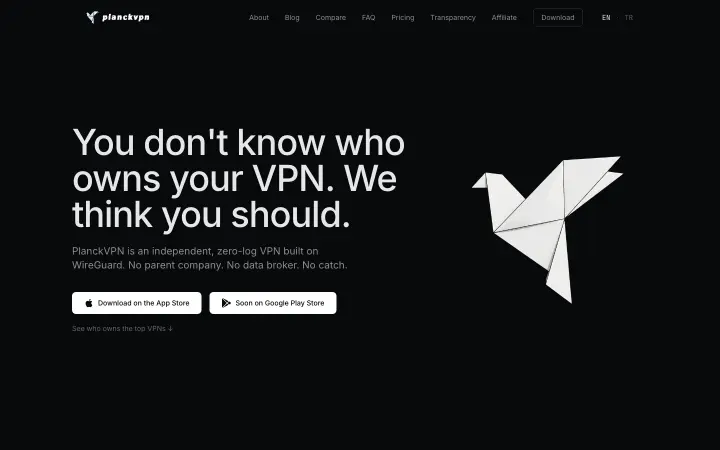
An independent, zero-log VPN built on WireGuard.
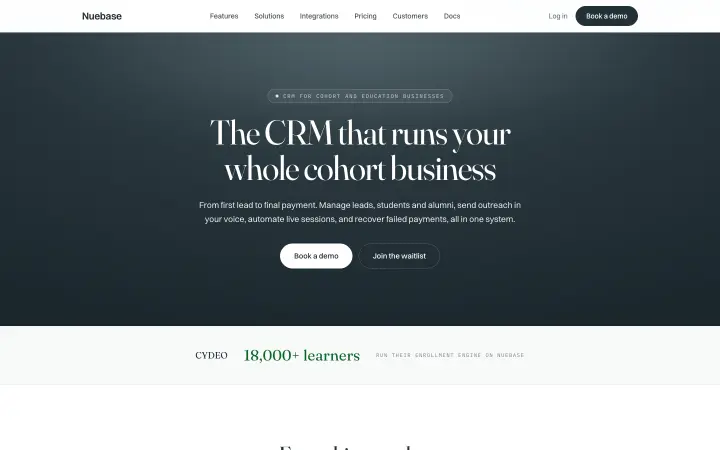
The CRM that runs our whole cohort business.
An AI coding assistant built for QA engineers, not just prompts.
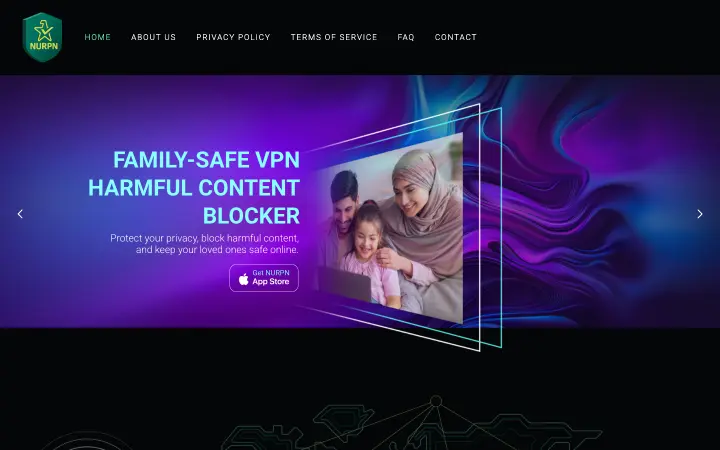
A family-safe VPN and content blocker.
The sessions end. This is what a seat leaves you with.
Every answer traced to a moment in class, in plain language you can say out loud.
74 topics ordered basic to advanced, plus the agentic SDET glossary and field manual.
Rehearse the answers out loud, on your own time, as many times as you need.
A real test-management system with your own account, so you own the whole workflow.
The agentic framework itself, plus prompt templates for code review, DevOps, database and QA work.
Recorded and shared after every session, at no extra cost.

Everything included: the live cohort, the résumé-ready framework, and $50 in real AI credits (Claude Code, Qwen, and DeepSeek) to run it.
30-day money-back guarantee
Most QA and engineering teams get a yearly training budget. Ask your manager first. Then we handle the paperwork: your company gets an invoice with its legal name, address, and VAT or tax ID.
01
Send the ready-made email. It covers the course, the cost, and what you will bring back to your team.
02
At checkout, choose “Invoice my employer” and add your company’s billing details. It takes about two minutes.
03
Your seat in the next cohort is held right away. Your company pays by card or bank transfer within 15 days.
Most of them started with no tech background at all. If we can take someone there to a QA job, we can take you from the 80% to the 20%.
“My daughter started asking where the money comes from. Now she sees her mom working in tech.”
Read her story“The discipline from the military helped, but CYDEO gave me the skills. Completely changed my life.”
Read his story
“When I saw my first paycheck, I couldn’t believe it. Nobody in my family thought seven months could change everything. It did.”
Read her story
“As a trainer, I could only count reps. Now I build test frameworks. It showed me how much potential I really have within myself.”
Read his story
“From delivering packages to writing test automation. I didn’t think this was possible for someone like me.”
Read her story
“Everyone had their doubts. A friend called it a scam. I proved them wrong through hard work. Now I protect data from home with a cup of coffee.”
Read her story
“I was tired of standing. Eight months of study taught me what four years of college couldn’t. Three raises in my first year without even asking.”
Read his story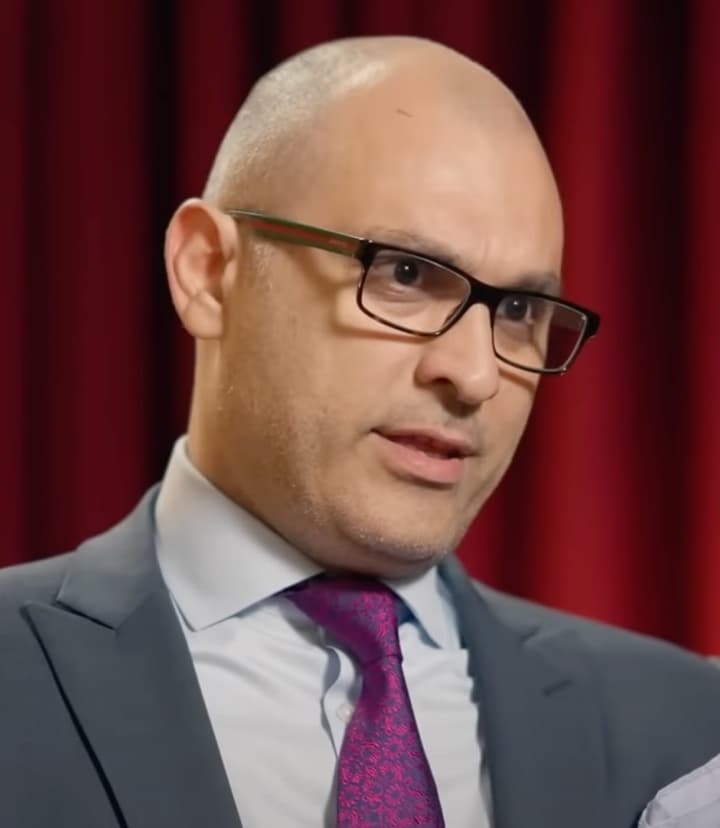
“I used to drive passengers to the buildings where I work now. I wasn’t smart, but I had desire. Now I’m making six figures and never missing my daughter’s life.”
Read her story
10 live sessions over four weeks, starting Thursday, October 1, 2026. The eight core sessions run Thursdays and Fridays, 11:00 AM to 3:00 PM ET: Oct 1-2, Oct 8-9, Oct 15-16, and Oct 22-23. On top of those, Wednesday 7:00 PM ET interview-prep sessions run with founder Kuzzat Altay, and they keep going after the cohort ends. Every session is recorded.
Yes. You can enroll and pay today, and your seat is confirmed straight away. This is the third cohort, starting Thursday, October 1, 2026, and seats are capped at 60. If you would rather not commit yet, the form lower down puts you on the list for the cohort after this one.
It's an upskill for working SDETs. If you're comfortable with Java/Selenium or Playwright and basic test automation, you have the 80%. We build the agentic 20% on top.
Every seat includes $50 in AI token credits for Claude Code, Qwen, and DeepSeek, the models you run in class. You practice on those credits instead of paying out of pocket.
Because paid students finish. In our experience, people who pay anything complete at far higher rates than a free cohort, roughly 80% higher for us. With the $50 token credit built in, your real tuition is almost nominal. The small commitment is what carries you to the end.
Claude Code is the agent you operate most, and your credit also covers lower-cost models. The point isn't one brand — it's learning to choose: you build an activity inventory that maps each QA task to the cheapest model that can actually do it, which is the part that makes a manager trust you with the bill.
Yes. You build and operate a Playwright + BDD agentic framework (planner / generator / healer over MCP) against a real app, you build your own MCP server under it, and you get the vocabulary to defend every part of it under interview pressure.
The framework repo and prompt templates, 386 interview questions with answers traced back to real class moments, a 74-topic study guide and glossary, a mock-interview platform to rehearse out loud, your own account on ZincTM and its MCP server, and every session recording. All of it at no extra cost.
No. The Wednesday interview-prep sessions with Kuzzat keep running after the cohort ends, there's a two-day bootcamp on building the framework from scratch, and ad-hoc sessions whenever the tooling shifts. Kuzzat also reads résumés personally, and we check in at three months to hear where you landed.